
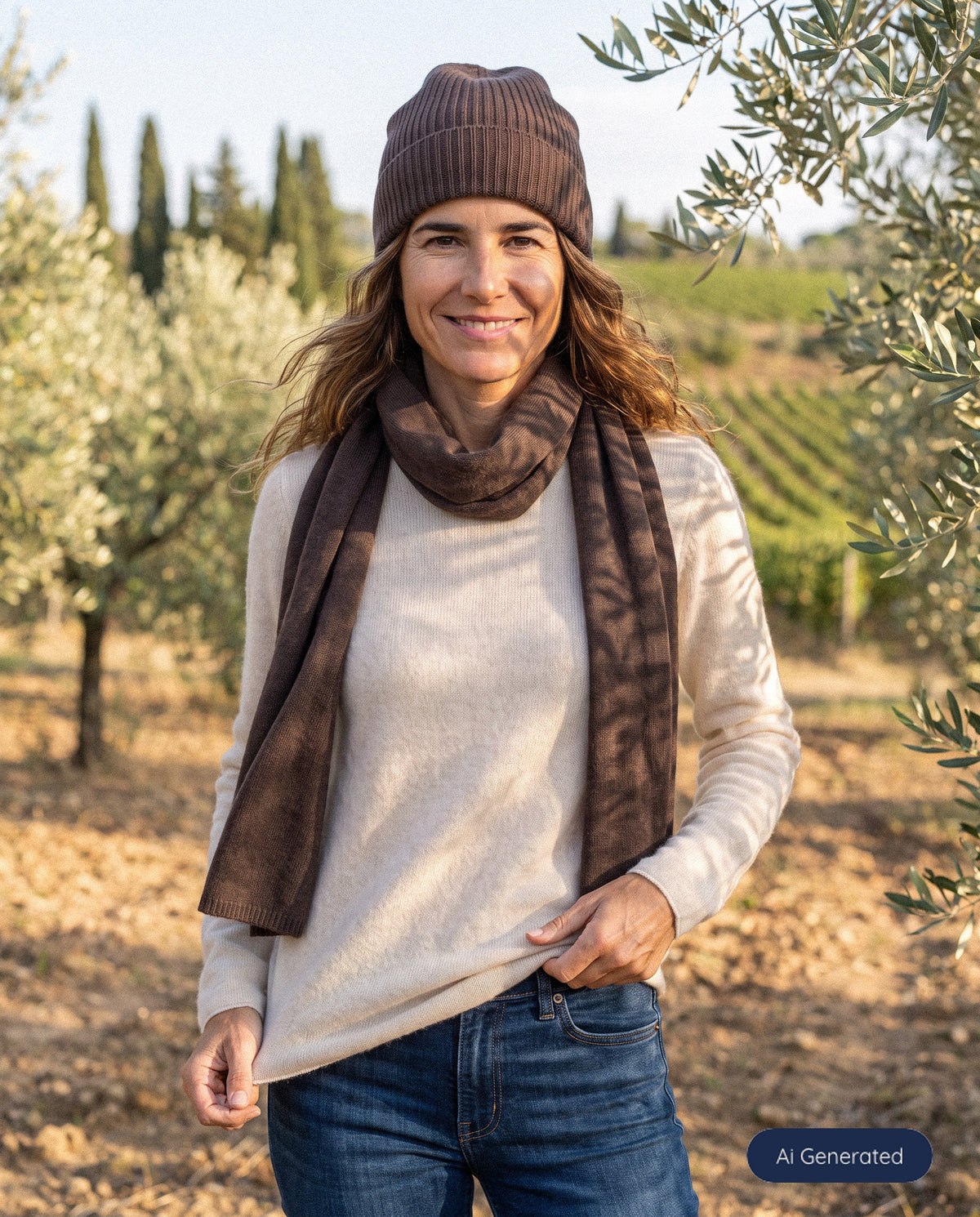
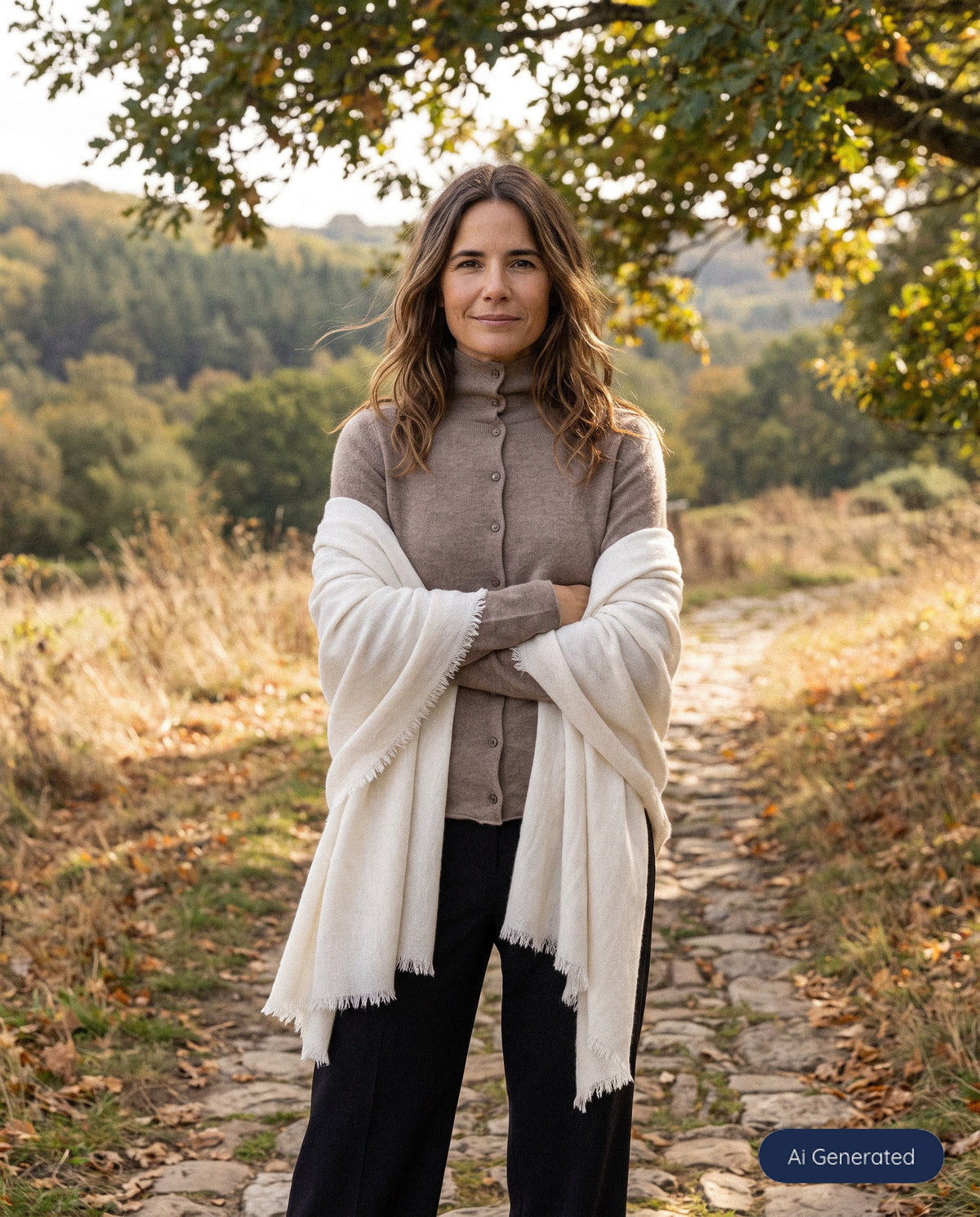
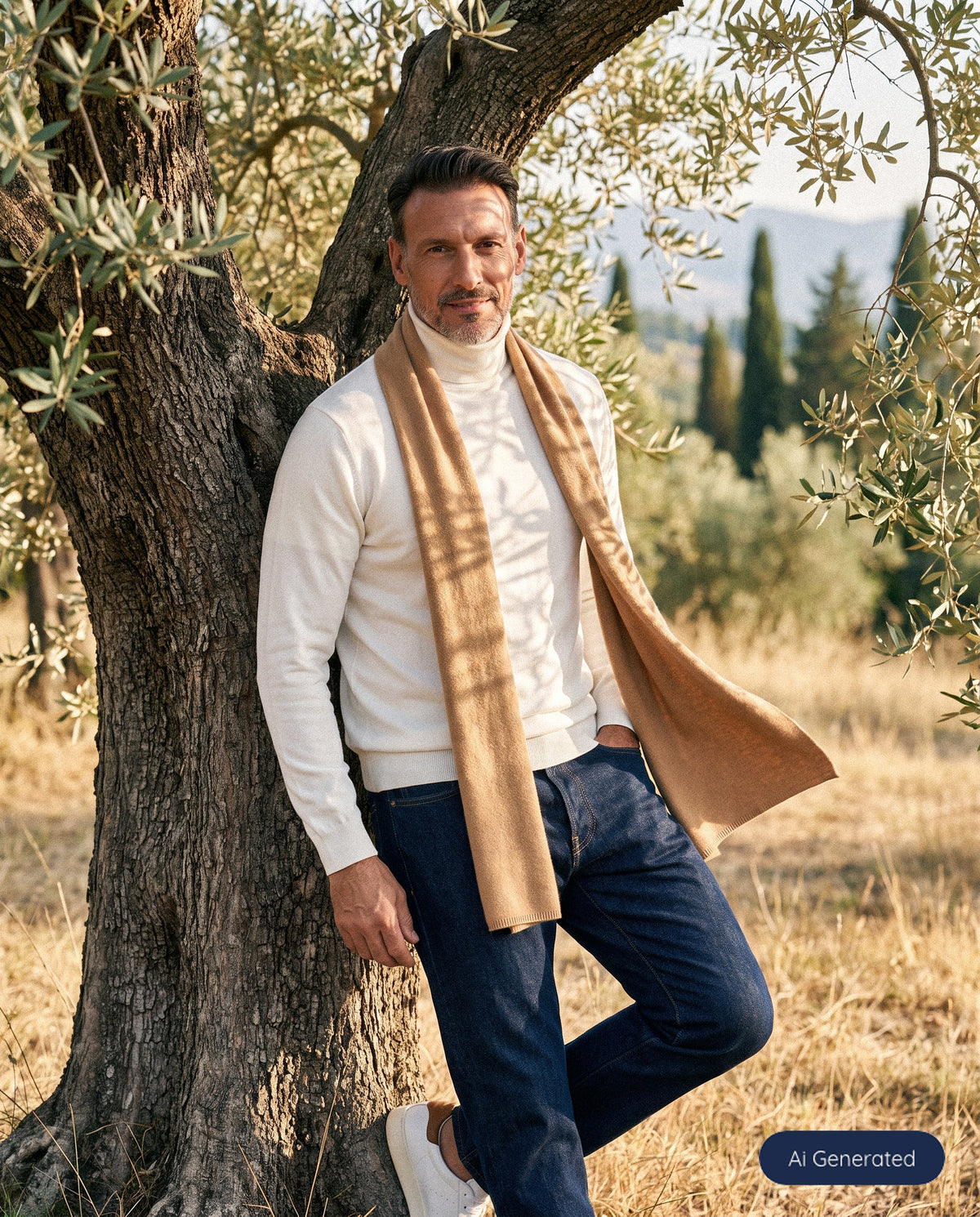


The Recycled collection
Recycled cashmere
Recycled cashmere comes from cashmere pieces and offcuts that already exist: instead of becoming waste, they go back to being yarn. It is something Prato has always known how to do, and it is why the Recycled collection started here and not somewhere else.
Below is how it works — and also what recycled cashmere cannot do. That is the part almost nobody tells you, and it is the part you actually need in order to choose.

It all started in Prato
Recycling cloth is not a recent fashion: it is the craft the Prato district grew up on. Carded wool was pulled out of collected rags, and new yarn was spun from the carded wool. It was done out of necessity, long before it became something to talk about.
"All the history of Italy and of Europe ends up in Prato: all of it, in rags." — Curzio Malaparte, Maledetti Toscani (1956).
In time the same method was applied to other fibers, cashmere included: worn pieces and production offcuts that would have gone in the trash go back to being yarn. Our Recycled collection came out of that — not out of a marketing idea, but out of a trade this city already had.

How cashmere is recycled
It starts with collection and sorting: the pieces and the offcuts are separated by fiber and by color, because the color of the yarn that comes out depends on the color of what goes in. The material is then pulled back apart into fiber, carded, and spun again.
We don't make the yarn: we buy it from mills in the district, small and midsize companies we have worked with for years, who develop the yarn we use together with us.
That is why you will not find percentages of water or energy saved on this page. They are everywhere, but they describe a process that is not ours: we would rather not take credit for numbers we have not measured.
Recycled is not the solution
A recycled fiber has already lived: it was spun, knitted, worn, and then taken back to being fiber. Every pass shortens it a little.
As long as virgin cashmere keeps entering the loop, never recycled before, the yarn that comes out of it holds. If only already recycled material came back into the loop, the fiber would get shorter at every pass, until it could no longer be worked at all.
Which means something simple and inconvenient: for recycled cashmere to go on existing, virgin cashmere has to go on being produced. It is not a contradiction, and there is no sense in waving it as a flag in either direction. It is how the fiber works.

Care and pilling
A recycled fiber is shorter than a virgin one, so on a piece in recycled cashmere the chance that pills form over time — pilling — is a little higher. How much depends above all on how you wear it and how you look after it.
That is why recycled asks for a little more attention than virgin does. Follow the washing instructions you'll find in every package: that is how you keep it looking good longer. The step by step is in our article How to wash cashmere.
That is why we work with both
Recycled cashmere is one part of the road toward making knitwear with less waste. It is not the finish line, and anyone selling it as the final answer is simplifying a great deal.
Dalle Piane Cashmere works with virgin yarns and with recycled yarns. Not to sit in the middle, but because it is the only honest way we know: without virgin, recycled runs out; without recycled, material that is still good gets thrown away.
On every piece, in the product page, you'll find which of the two you are looking at.

100% Made in Italy
Yarn we select, knitted in our own factory in Prato. Our Factory