

The fiber
Cashmere
Cashmere is not a fine wool: it is a different fiber. It comes from the undercoat of a goat that lives where winter drops below -22°F (-30°C), it is combed by hand once a year, and there is very little of it.
Everything else — the price, the lightness, the care it asks for — comes from that.
From Kashmir to the highlands of Asia
The name comes from a valley in the Himalayas, Kashmir, where very fine shawls were woven for centuries. They reached Europe around 1800 and became a fashion: the name stayed attached to the fiber, even though the goats that produce it live much farther north.
They are Hircus goats (Capra hircus), on the high plateaus between Mongolia, northern China, Iran, and Afghanistan. To get through that cold they carry two coats: an outer one, long and coarse, that turns the wind and the rain; and underneath, a very fine undercoat that holds the heat in.
That undercoat is cashmere. One goat produces very little of it, and there is no way to produce more: that is why this fiber costs what it costs, and always will.

Combed, not shorn
This is where the whole difference sits. Shearing takes everything off at once, outer coat and undercoat together. Cashmere is combed by hand instead, one goat at a time, during the natural spring molt: the comb lifts the undercoat the animal is already shedding and leaves the long hair where it is. One goat can take up to an hour.
The fiber is then separated from the coarse hairs left in it, washed, and sorted by fineness, length, and color. White is worth more than the rest for a practical reason, not a noble one: it is the only one that can be dyed any shade.
A goat gives 5 to 9 ounces of raw fiber a year, and cleaning takes more than half of that away. One sweater takes the yearly combing of three or four goats. That, before any knitting at all, is what explains the price of cashmere.

The yarn we buy
We don't make the yarn: we buy it, and we choose it for fineness and fiber length. The finer and the longer the fiber, the thinner the yarn can be spun without giving up strength.
The virgin cashmere we buy is certified The Good Cashmere Standard®, the standard of the Aid by Trade Foundation, created for the cashmere of Inner Mongolia. Through independent audits it checks four things: animal welfare — how the goats are fed, treated, housed, and combed — the protection of the land, the conditions of the people working on the farms, and how the farm is run. The certificate lasts twelve months and has to be renewed; mistreatment of animals, child or forced labor, and banned pesticides mean exclusion.
The same yarn is certified OEKO-TEX® STANDARD 100, which covers something else: that the product you end up wearing is free of substances harmful to skin.
These are not our own promises: they are checks made by someone else. On every piece, in the product page, you will find which yarn is certified and under which standard.
Virgin or recycled?
You will find both on this site, and they are not the same thing.
Virgin cashmere is fiber on its first life: longer, stronger, softer. Cared for properly, a piece stays with you for years — and at the end of that life it is exactly the material a recycled yarn is made from.
Recycled cashmere comes from pieces and offcuts that already exist, so it asks for no new raw material. But the fiber has already lived once and is shorter than virgin fiber: pills form a little more easily, and the piece asks for a little more attention in the wash.
There is no winner here, and be wary of anyone who tells you otherwise. Recycled exists because virgin exists — with no new fiber to recycle, the loop stops sooner or later — and virgin only makes sense if the piece lasts. That is why we work with both, and why every product page tells you which one you are looking at.
The pure cashmere collections
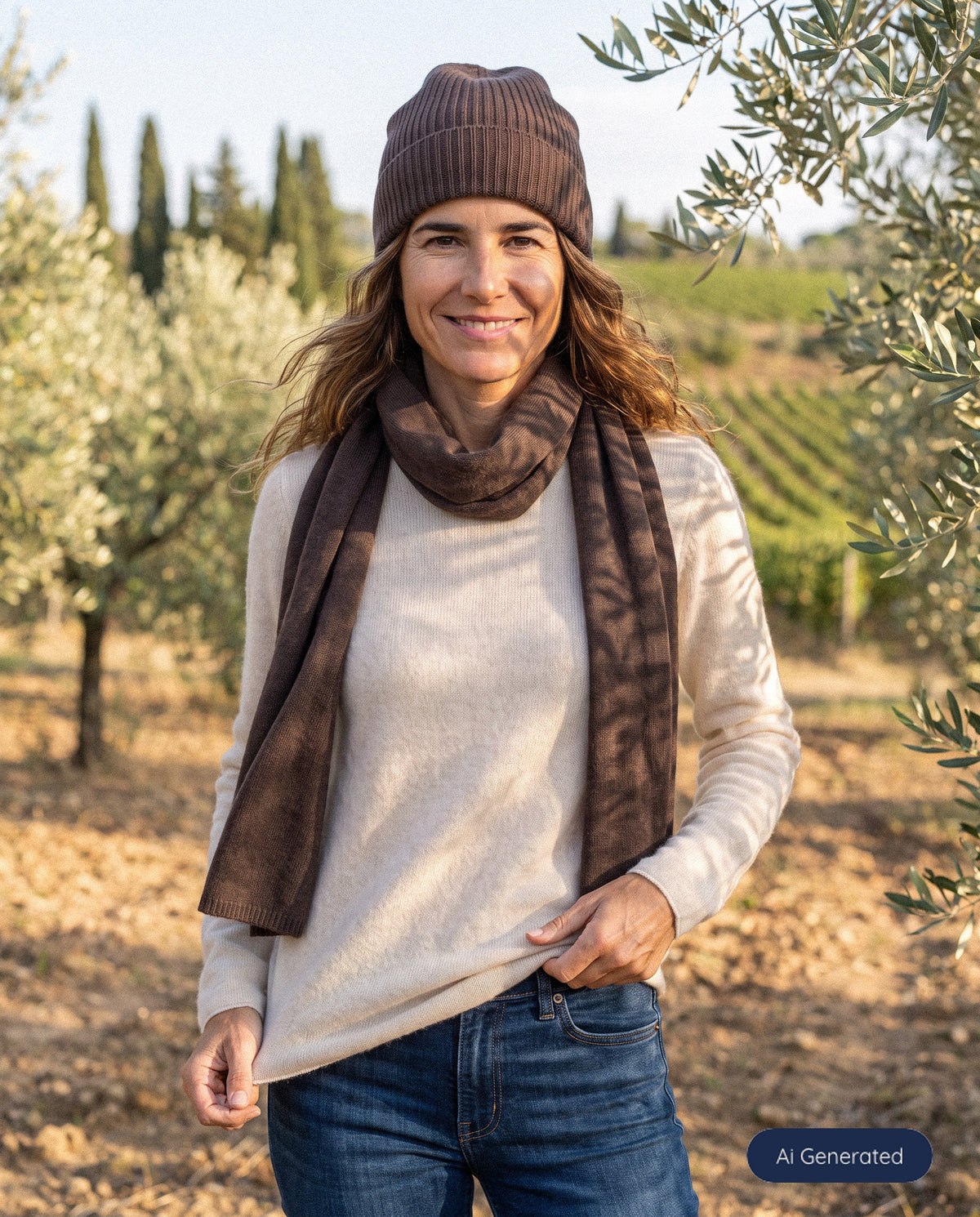
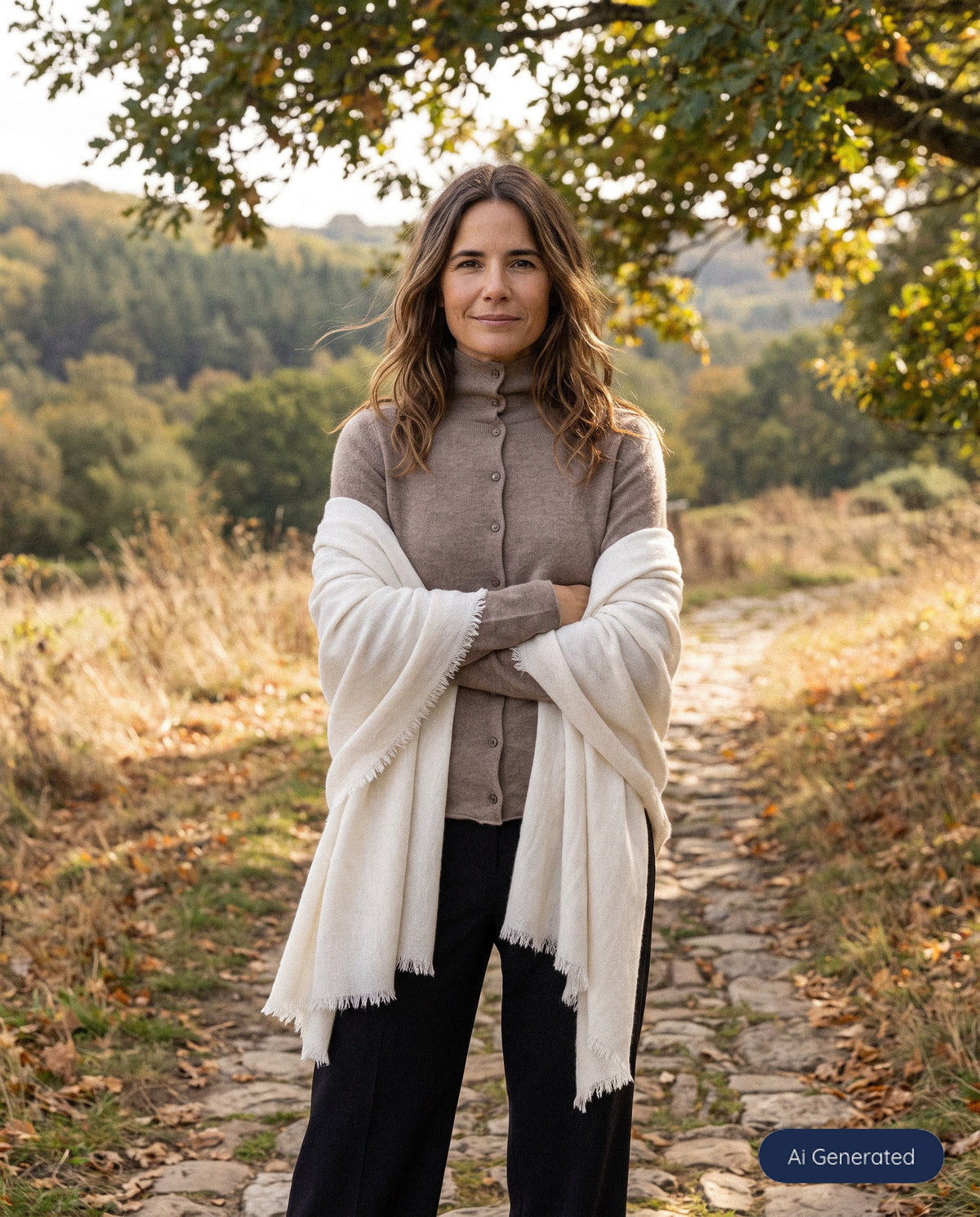
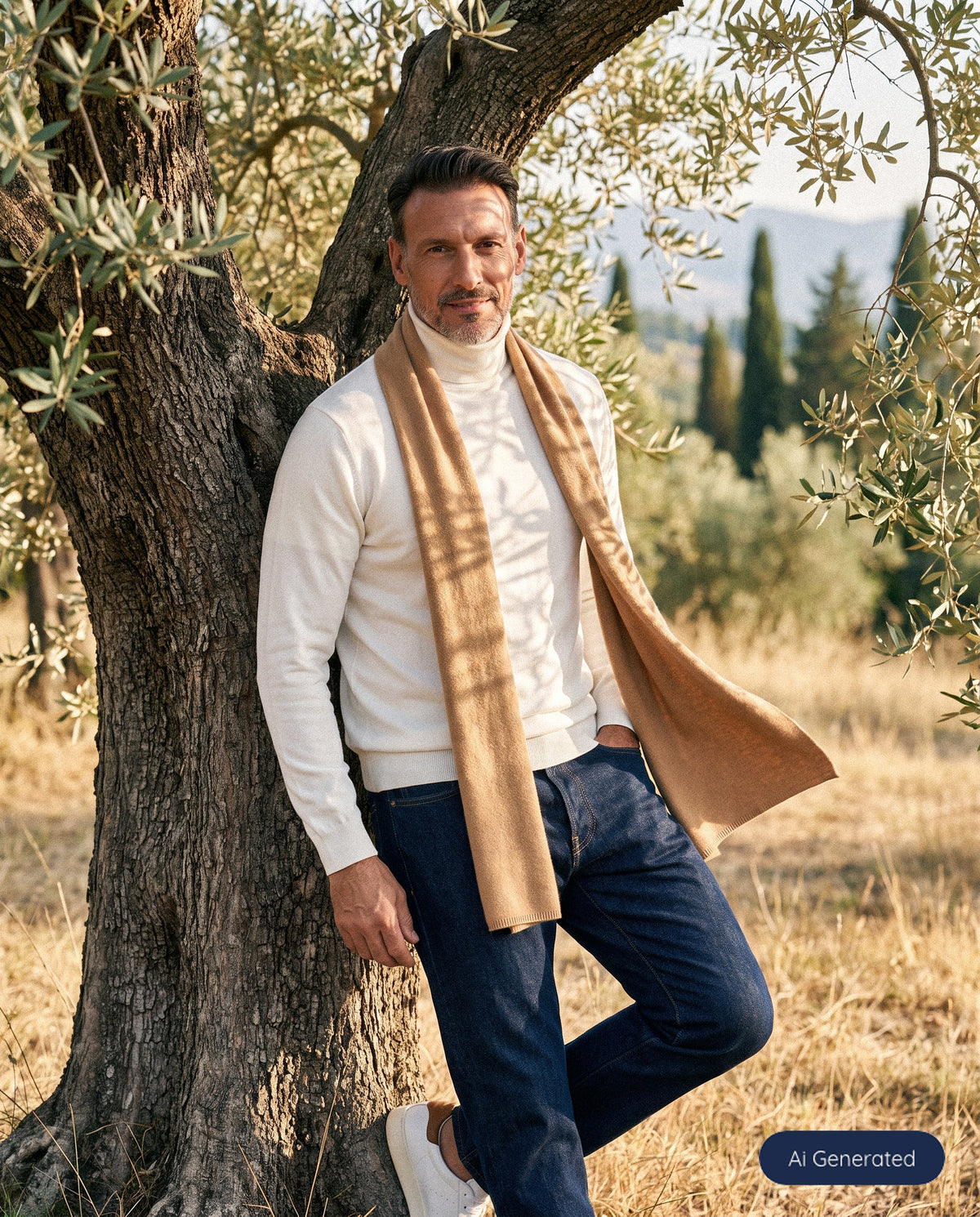
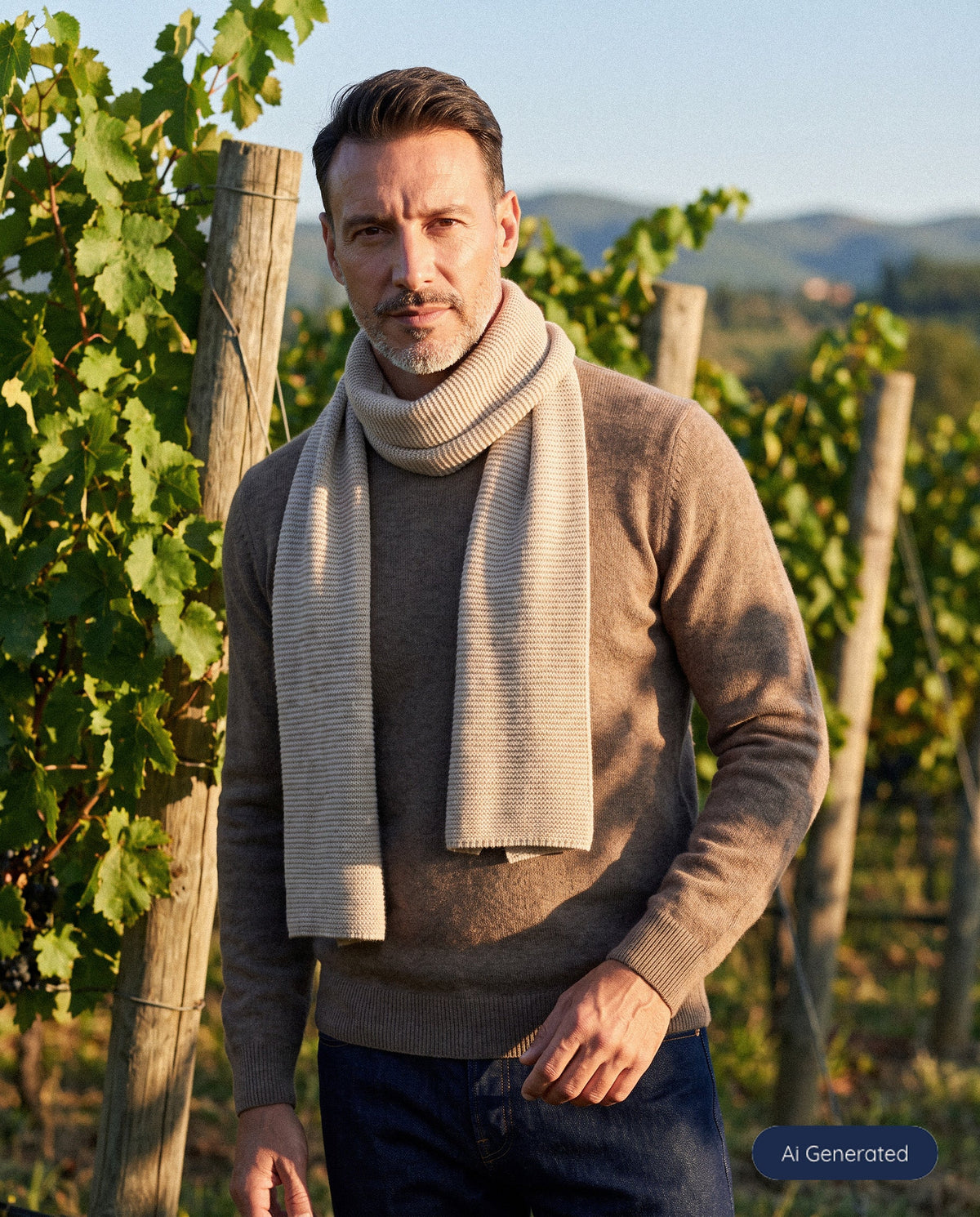
Sweaters, turtlenecks, cardigans, ponchos, scarves, wraps, and accessories in 100% cashmere. Designed and knitted in our own factory in Prato, Tuscany.

100% Made in Italy
Yarn we select, knitted in our own factory in Prato. Our Factory